

Beginner's Guide to Cotswold Walks: 5 Easy Circular Routes Under 5 Miles
The Cotswolds look gentle from a car window: honey-stone villages, low hills, sheep grazing on the skyline. On foot they are just as forgiving. A dense network of waymarked footpaths and bridleways links the villages, and plenty of short loops stay off the steep escarpment entirely. The five routes below are all circular, all under five miles, and each one finishes within a few minutes of a decent pub.
What to expect on a beginner's Cotswold walk
Nothing here is alpine, but "easy" in the Cotswolds still means real countryside. Budget an hour and a half to two and a half hours at a relaxed pace, including stops, and expect the following on almost every route:
- Gates and stiles. Kissing gates are common, wooden stiles less so than they used to be. Some are awkward with a backpack or a dog.
- Mud. River valley paths hold water from October to April. After heavy rain, expect the first mile of the Windrush and Coln routes to be genuinely squelchy.
- Livestock. Sheep and cattle graze most fields. Walk around them, keep dogs close and on a lead, and always close gates behind you.
- Short climbs. Almost every route has one modest rise, usually under ten minutes of effort.
- Uneven ground. Tussocky meadow, tree roots and worn stone. Trainers will do in dry summer weather; waterproof walking shoes with grip are better the rest of the year.
If you are returning to walking after an injury or illness, or managing a heart or joint condition, have a word with your GP before committing to a longer route. Most of these are short enough to turn back from at any point.
Five easy circular routes
1. Bourton-on-the-Water to Lower Slaughter — about 3 miles
Start from the Station Road car park and follow the Windrush downstream on the field path, leaving the crowds behind within ten minutes. The going is flat and grassy, with a couple of stiles, and you arrive in Lower Slaughter beside the old mill. Return the same way, or loop back up Copse Hill Road for a different view. Very muddy after rain, but the flattest introduction to the area you will find. Pubs: The Mousetrap Inn and The Old New Inn in Bourton.
2. Chipping Campden to Broad Campden — about 3 miles
Leave town past St James' Church and drop down through fields to Broad Campden, a hamlet with a fine old chapel and a village green. The descent is gentle; the return climb is short and shaded. Paths are mostly grass and can be slippery underfoot in autumn. Pubs: The Bakers Arms at Broad Campden, or The Eight Bells back in Chipping Campden. Avoid the temptation to add Dover's Hill — that one is a proper pull.
3. Burford to Swinbrook via Widford — about 4 miles
A river valley walk with a bit of history. Cross Burford's bridge and follow the Windrush upstream, detouring to Widford's tiny isolated church, reached across a footbridge in a field. Continue to Swinbrook, then return across the meadows to Burford. Mostly level, several gates, and the wettest of the five in winter. Pubs: The Swan Inn at Swinbrook sits right by the water; The Angel and The Highwayman are back in Burford.
4. Winchcombe and Sudeley Castle — about 3 miles
From the town centre, follow lanes and footpaths up past St Peter's Church towards Sudeley, skirt the edge of the park and return through the streets. One steady ten-minute climb, then easy going. Note that the castle itself is a paid visitor attraction — the public path passes the outside only, so don't plan on wandering the gardens. Pubs: The Lion and The Corner Cupboard in Winchcombe.
5. Bibury to Ablington along the River Coln — about 3 miles
See Arlington Row early, before the coaches arrive, then follow the Coln upstream on the riverside path to the hamlet of Ablington and return by field paths on the other bank. Flat throughout, with a few gates and one short section that floods after prolonged rain. Pubs: The Swan Hotel and The Catherine Wheel in Bibury.
Reading the map when you are new to it
Buy the Ordnance Survey Explorer sheet for the area at 1:25,000 scale. The extra detail matters when you are learning to match a field boundary to a line on paper, and the Landranger series at 1:50,000 hides exactly the gates and junctions you need. A short routine before you set off saves a lot of standing about:
- Photograph the information board at the start, if there is one. It often shows the route more clearly than the map.
- Mark your grid reference for the car park or the pub, so you have a target on the return leg.
- Check the legend: yellow waymark discs are public footpaths, blue are bridleways, red are byways open to all traffic.
- Look for waymark posts at every stile and gate. If you have walked 200 metres with no waymark and no obvious path, turn around and re-read the junction.
- Orient the map using a church tower, a distinctive hill or the sun rather than guessing.
A paper map does not run out of battery. Cold weather drains phone batteries quickly in winter, so carry a small power bank if you are relying on an app.
Pubs, parking and other practicalities
Village car parks are small and fill by mid-morning in summer. Arrive early, pay for the time you actually need, and never park on a verge, in front of a gate or across a driveway — it is the quickest way to sour a village on walkers. Most pubs serve food until around 2pm and again from 6pm, with a quiet gap in between; if you are walking for a late lunch, ring ahead. Dogs are usually welcome in the bar rather than the dining room.
Take a light rucksack with water, a waterproof jacket, a snack and a charged phone. Wear something you do not mind getting muddy. Tell someone where you are going and roughly when you expect to be back.
Before you set off
Pick one route, not four. Do it once in good weather, in daylight, and get a feel for how the paths connect — the stiles, the waymarks, the point where the field path meets the lane. The second time round you will spend far less time looking at the map and far more time looking at the countryside. Take your litter home, keep dogs under control around livestock and ground-nesting birds, and leave gates as you find them. That is the whole contract, and it keeps these paths open and pleasant for everyone who follows.
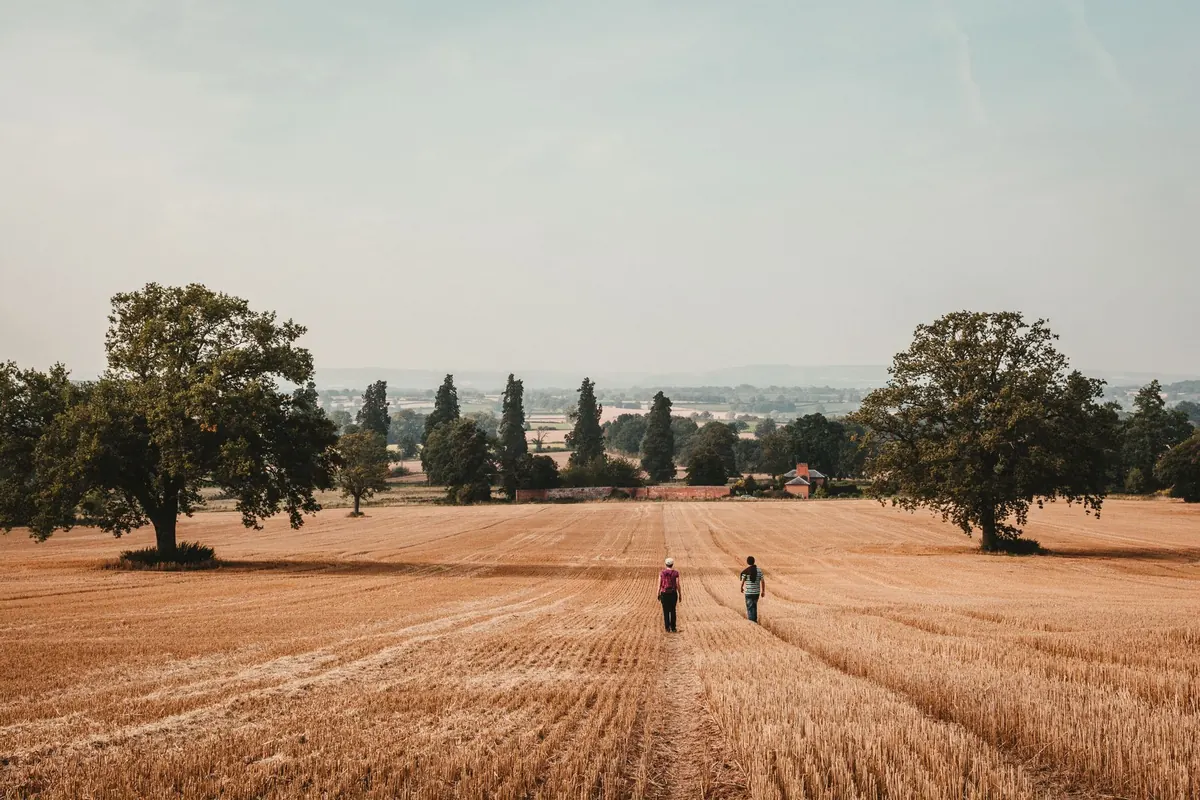
Photo: Gordon Plant / Pexels